TECHNOLOGY
Mycelium: nature's binder
and fermenter
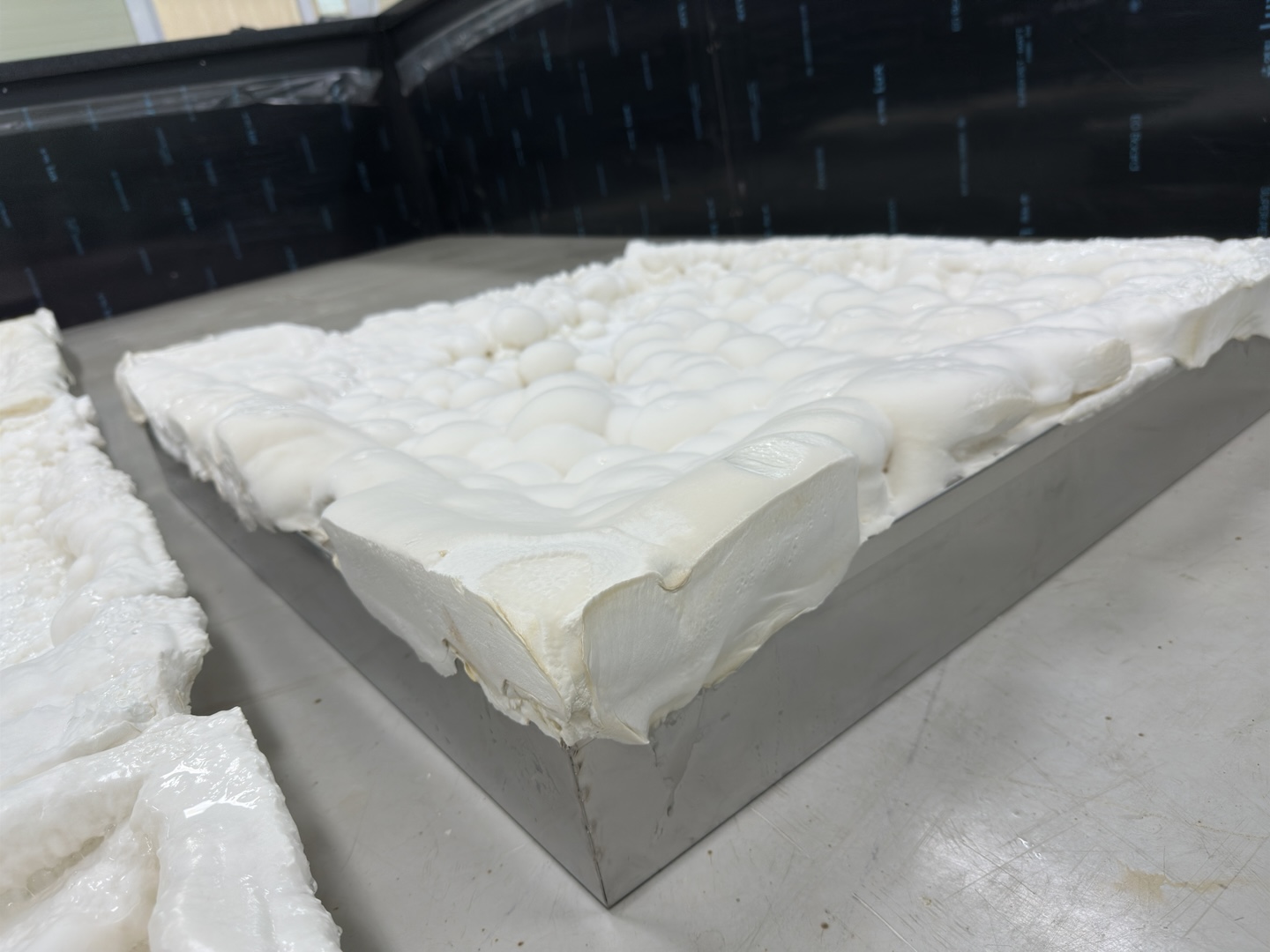
Mycelium is the feeding body of a mushroom: thread-like cells woven into a web. As it digests and grows through a substrate, it binds materials together and transforms nutrition.
MYCELIUM
The hidden network
that ties forests together
Under the forest floor, mycelium is the clean-up crew that breaks down leaves and wood and recycles nutrients. Its hyphae grow between particles and build a tough three-dimensional web with chitin-rich cell walls.
We use this in two ways: binding, where the web knits materials together, and fermentation, where enzymes change the taste and nutrition of raw ingredients.
- Binding — turning sawdust, spent substrate and pumice into mats and boards
- Fermentation — turning bean and grain protein into savory food ingredients
SOLID-STATE FERMENTATION
A solid-state
fermentation platform
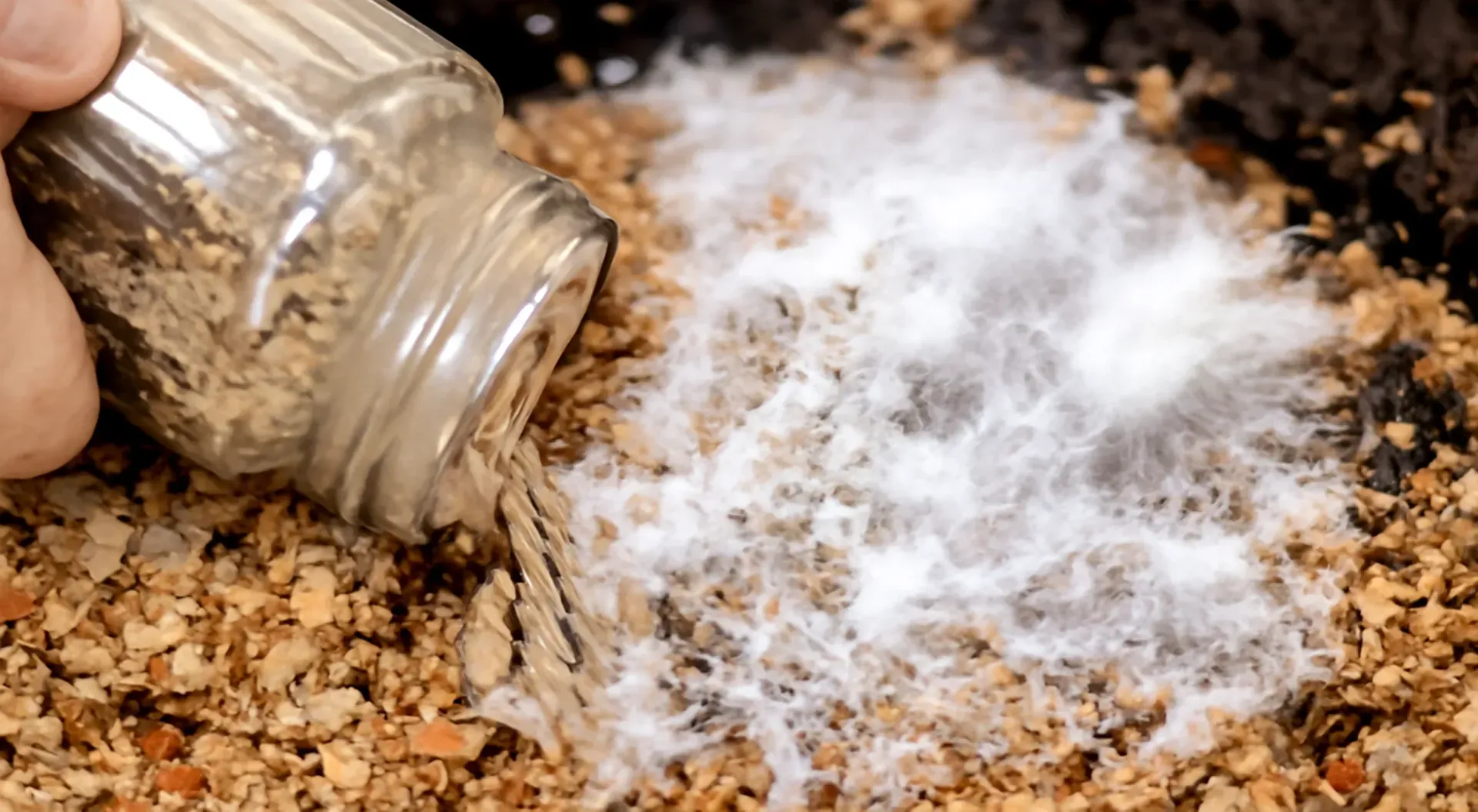
Our processes are built on solid-state fermentation (SSF): mycelium grows on a solid substrate rather than in liquid. It scales in trays, jars and bags without large bioreactors, keeps capital needs low, and lets one platform make both materials and food.
Standard operating procedures record strain, substrate and conditions batch by batch for reproducibility.
- Modular scale-up in trays, jars and bags
- Batch records and contamination criteria
- A separate edible-only standard for the food line
PROCESS
Five steps from strain to product
-
01
Select the strain
We select edible and medicinal mushroom strains such as reishi and Phellinus for each use and manage them through a three-stage seed system.
-
02
Design the substrate
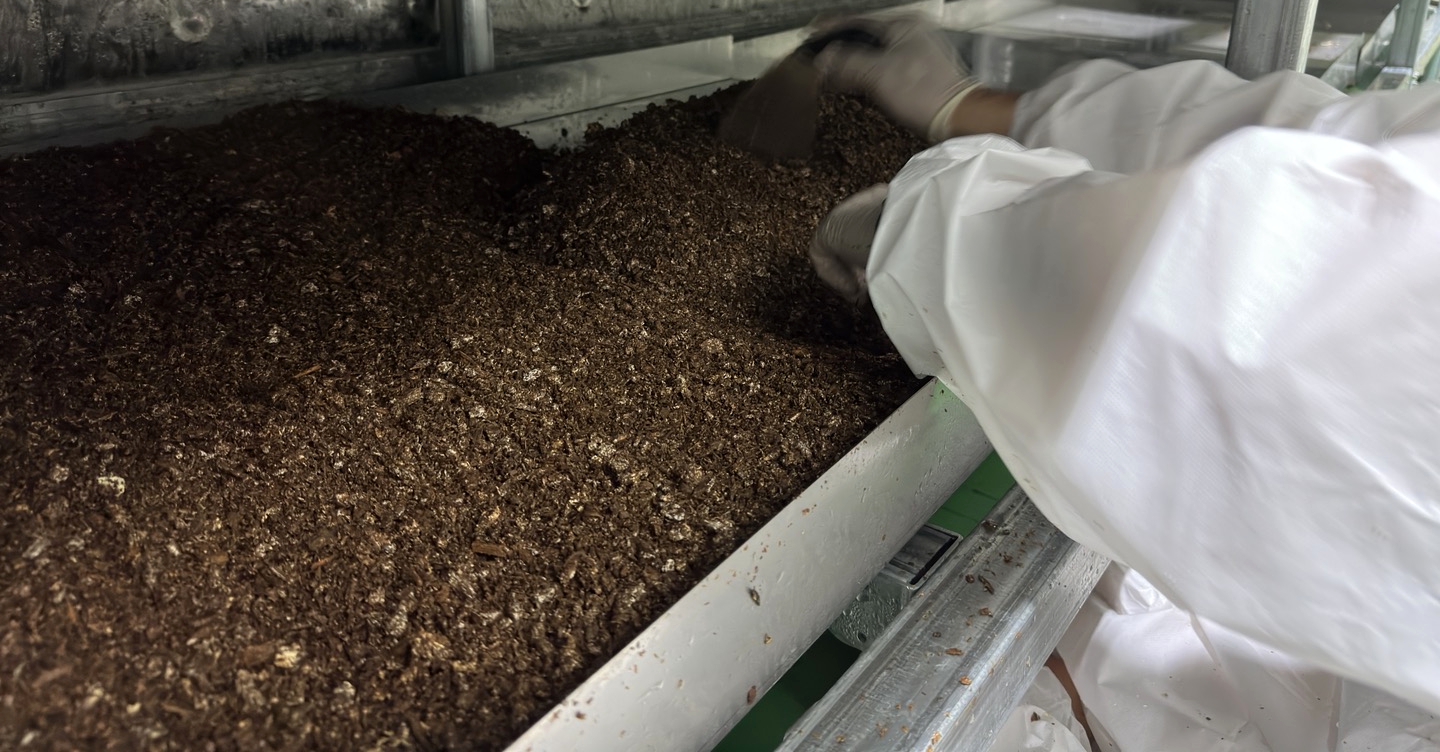
We design the substrate and moisture for each product: spent substrate and pumice, or beans and grains.
-
03
Sterilize & inoculate
After autoclave sterilization, seed culture is spread evenly through the substrate under aseptic conditions.
-
04
Grow & bind
Temperature, humidity and CO₂ are controlled so the mycelium knits the whole substrate together.
-
05
Harvest & finish
Mats ship as greige material, building panels are formed and dried, food is dried at low temperature and milled.
STRAIN LIBRARY
Core strains
We match the strain to the product and grow each one separately.
Reishi · Ganoderma lucidum
A mushroom long used in traditional medicine. Fast, dense mycelial growth makes it suitable for food fermentation and mats.
Phellinus linteus
A prized medicinal mushroom in Korea with a characteristic yellow-brown pigment and aroma, used for soybean-based meat alternatives.
Strain discovery
We keep screening edible and medicinal strains for binding strength, growth speed and flavor.
QUALITY
Quality principles
- Aseptic control
- Autoclave sterilization, aseptic inoculation and uninoculated controls to verify sterility.
- Seed cultures
- Three-stage system (mother → liquid → grain) with limited sub-culturing.
- Records
- Formula, strain, conditions and results recorded per batch number.
- Food line
- Only edible and food-grade inputs; low-temperature drying and nitrogen-flushed packaging.
- Materials line
- Performance figures are published only after certified testing.
Detailed process parameters are proprietary and not disclosed.
Let's grow something together.
We welcome sample requests, joint research, supply/OEM and investment inquiries.