BUSINESS 02 · BUILDING MATERIAL
Spent substrate and pumice,
bound into a fire-safe panel
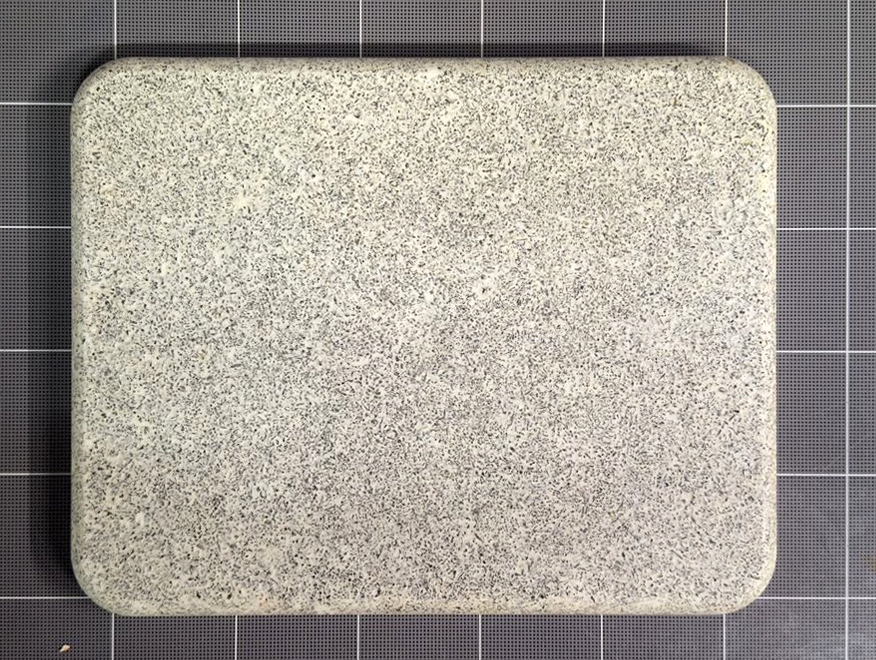
We add pumice, a volcanic stone, to spent mushroom substrate and let mycelium bind it into one piece — a light, fire-resistant interior material made from what used to be waste.
WHY IT MATTERS
Wasted substrate, tougher fire rules
Mushroom farms leave behind large volumes of spent substrate that cost money to dispose of, while fire-safety rules for interior materials keep getting stricter. We aim to solve both with one material: inorganic pumice raises fire resistance, and mycelium works as a natural binder.
DESIGN GOALS
What we are designing for
These are design targets; figures will be published after certified testing.
Fire resistance
Inorganic pumice lowers the share of combustible organic matter.
Lightweight
Porous pumice and mycelium aim at a light panel.
Circular input
Spent mushroom substrate is upcycled as the main input.
Non-toxic binding
Mycelium, not synthetic glue, binds the particles.
PROCESS
How it is made
-
01
Collect & grind
Spent substrate from mushroom farms is collected and ground.
-
02
Mix pumice
Pumice powder is blended into the substrate.
-
03
Sterilize & inoculate
The mix is sterilized and inoculated.
-
04
Grow in molds
Mycelium binds the mix inside molds.
-
05
Dry & test
Drying stops growth; fire and physical tests follow.
DEVELOPMENT
Development status
- Inputs
- Spent mushroom substrate (upcycled) + pumice
- Applications
- Wall and ceiling interiors; acoustic panels (to be evaluated)
- Stage
- Lab composition trials (4th trial in 2026)
- Target tests
- Non-combustible: KS F ISO 1182 · Quasi-non-combustible: KS F ISO 5660-1 · Gas toxicity: KS F 2271
This product is under development; fire classification will be confirmed by an accredited testing body.
Let's grow something together.
We welcome sample requests, joint research, supply/OEM and investment inquiries.